California sea lions are found along the west coast of North America from southwestern Canada to southern Mexico. Males are the larger of the species and grow to a length of about 8 feet and can weigh as much as 800 pounds. They have a dark grayish brown (almost black) colored skin as well as a crest on their forehead that becomes more visible with age. Females measure up to 5 feet in length and weigh as much as 200 pounds and have a lighter brown skin than the males.
California sea lions main source of food is fish including whiting, anchovies, sardine, mackerel, and squid. Their excellent swimming ability allows them to hunt for food in water as deep as 80 feet and they may stay submerged in water for 3-5 minutes on a single dive. Sea lions are also know for their distinctive "barking" sound used to communicate with females.
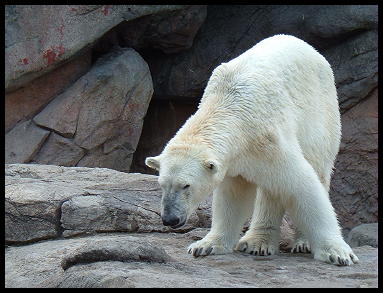
As the largest member of the bear family, polar bears make their home in a number of Arctic locations including Russia, Alaska, Canada, and Norway, among others. Female polar bears grow to a length of 6-8 feet and weight between 330-550 pounds. Males measure between 8-11 feet in length and weigh between 775-1500 pounds. Eating a diet that consists mainly of seal meat, polar bears have been known to eat young walrus and even whale carcasses.
While polar bears appear to be white in color, their fur is actually clear hollow tube that reflects and scatters light. Polar bears are so well insulated so as to retain their body heat (98.6° F) even at temperatures as low as -50° F, thanks to their thick fur coats and a layer of blubber that can measure as thick as 4.5 inches.
As at home in the water as they are on land (or ice), the polar bears wide paws make them excellent swimmers. Using their front paws as paddles to move through the water, their back legs are used like rudders to steer trough water. Their wide paws also disperse their body weight, helping them to walk on thin ice without falling through.
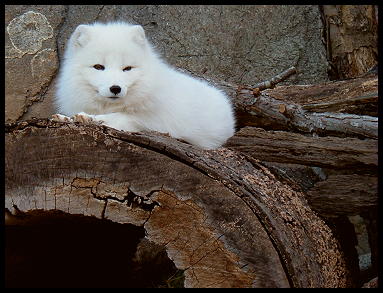
The arctic fox can be found in living in the arctic regions of Alaska, Canada, and Russia. Arctic foxes are well equipped to live in this extreme environment. Their fur is the warmest of any mammal and their short legs and furry foot pads enable them to move easily in snow or on ice. It is interesting to note that while their fur is white in the winter and helps them hide in the snow. During the warmer months of the year they shed the warm winter coat for a grayish brown coat that helps them hide when there is no snow.
Weighing between 6-10 pounds at adulthood, the arctic fox stands 10-12 inches height at the shoulders. Their diet consists mainly of small mammals such as tundra voles and lemmings but also
include nesting sea birds like puffins. Arctic foxes also will rely on polar bears for food, eating leftovers from a polar bear kill. A single male and female become mating partners and will mate for live. The arctic fox is known for having a large number of pups in a single litter with an average of seven and as many as fifteen. While they are not considered and endangered species, the arctic fox population is threatened due to their being hunted for their fur and habitat loss.